The Workplace in 2027 – Beyond Hybrid
The modern workplace is in the middle of a quiet revolution. After years of uncertainty driven by the pandemic and now the rapid rise of artificial intelligence, business leaders are finally gaining clarity on what the future of work looks like. And the message is clear: the office is no longer just a place to sit and work—it has become a strategic tool for collaboration, innovation, and employee wellbeing.
By 2027, Generation Z will comprise over 30% of the workforce, and artificial intelligence will be deeply integrated into daily workflows. According to Steelcase’s latest research, 96% of leaders plan to update their workspaces within the next two years. This isn’t merely about aesthetics—it’s about creating environments that can evolve alongside technology and changing work patterns. The demand for modern office furniture that adapts to these shifts has never been higher.
The global modern office furniture market is projected to expand from USD 80.45 billion in 2025 to USD 117.98 billion by 2031, registering a CAGR of 6.59%. This growth is fueled by accelerated urbanization in emerging markets and the strategic redesign of physical workspaces to encourage in-person collaboration. Companies are increasingly seeking contemporary office furniture solutions that balance aesthetics with functionality.
Based on our experience serving clients across 60 countries and thousands of commercial projects, this comprehensive guide reveals the 7 defining trends that will shape modern office furniture selection in 2027—not just what’s trending, but why it matters and how to prepare your procurement strategy.
Trend 1 – AI-Integrated Furniture: The Workspace Learns
What’s Changing
By 2027, “smart furniture” will evolve into cognitive furniture. Rather than users actively adjusting their environment, furniture will learn from occupant behavior and adapt automatically. This shift is driving the next generation of modern office furniture design, where technology becomes invisible but ever-present.
Key Drivers
Sensor costs have dropped by over 80% in the past five years, making embedded intelligence commercially viable for office furniture manufacturers. Employees now expect personalized experiences that mirror their digital environments. Organizations need real-time data on space utilization to optimize real estate portfolios
Real-World Applications
AI-Integrated Desks
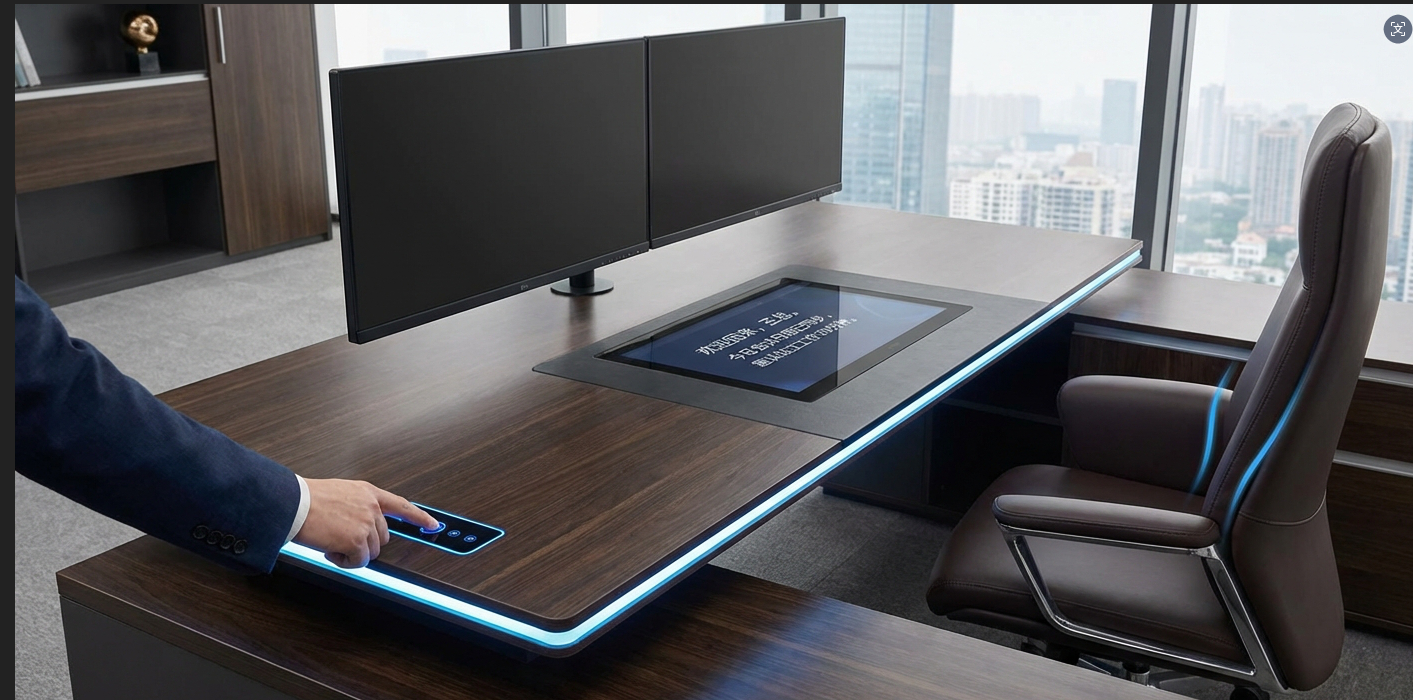
The next generation of height-adjustable desks will recognize users via fingerprint or badge and automatically adjust to their preferred height, monitor position, and even lighting preferences. These desks learn from usage patterns—if you consistently stand after lunch, the desk anticipates and adjusts. This represents a fundamental shift in how contemporary office furniture interacts with its users.
Intelligent Seating
Smart chairs will monitor posture and sitting duration, providing gentle haptic feedback when it’s time to adjust position. Over time, they accumulate data that helps organizations understand wellness trends and optimize ergonomic programs. These innovations are transforming expectations for modern office furniture.
Predictive Conference Rooms
Meeting spaces will analyze historical usage patterns to suggest optimal configurations. If a room is consistently used for hybrid presentations, the system might recommend adjusting the table layout or adding supplementary lighting for video participants.
The Data Behind the Trend
According to the Steelcase Leader Research 2025, organizations are racing to unlock the benefits of AI, and the workplace is becoming a strategic asset in that transformation. The need for greater flexibility is driven by the unknown ways in which AI will change the nature of people’s jobs and the ways they’ll work as the technology matures.
What Procurement Professionals Should Ask
How is user data collected, stored, and protected?
What is the expected lifespan of electronic components in your modern office furniture?
Can smart furniture be upgraded as technology evolves, or will it require replacement?
Trend 2 – Circular Economy Design: From Sustainability to Regeneration
What’s Changing
By 2027, “sustainability” as a buzzword will be insufficient. The focus has shifted to circular economy principles—modern office furniture designed to be disassembled, repaired, upgraded, and ultimately fully recycled. Corporate tenants, driven by their own Environmental, Social, and Governance (ESG) mandates, now insist on furniture solutions that incorporate recycled materials and ensure end-of-life recyclability to help mitigate Scope 3 emissions.
Key Drivers
The European Union’s Ecodesign for Sustainable Products Regulation is fundamentally changing manufacturer obligations for office furniture. Major corporations including Microsoft, Google, and Amazon now require suppliers to provide material passports documenting every component’s origin and recyclability. ESG reporting is becoming mandatory for publicly traded companies, with Scope 3 emissions under increasing scrutiny
Real-World Applications
Designed for Disassembly
Future-proof modern office furniture uses mechanical fasteners rather than permanent adhesives, allowing components to be separated by material type at end of life. This “design for disassembly” approach enables true recycling rather than downcycling.
Material Passports
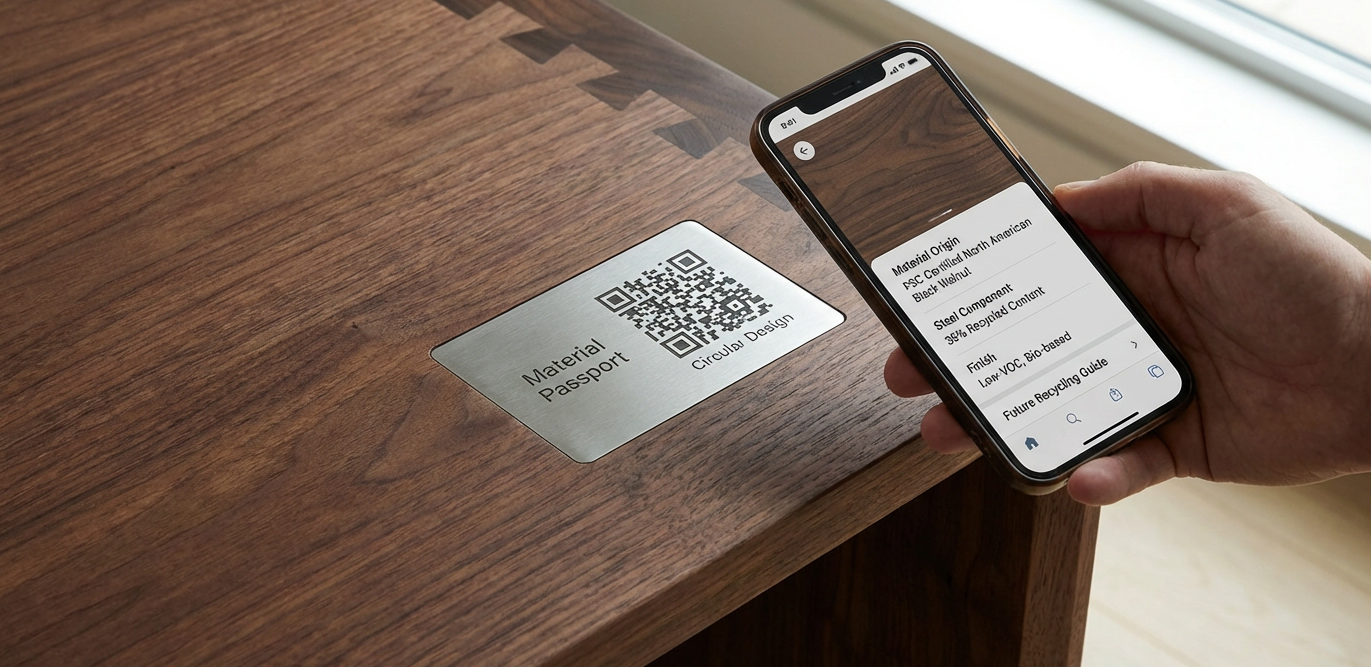
Each piece of contemporary office furniture will include a QR code linking to a digital passport documenting every material used, its source, carbon footprint, and instructions for future recycling or repair. This transparency is becoming a procurement requirement for multinational corporations.
Furniture-as-a-Service
Manufacturers retain ownership of furniture, providing it to clients through subscription models. This incentivizes durability and upgradeability—the manufacturer benefits when products last longer and can be easily refurbished for the next client.
Industry Progress
According to Steelcase’s 2024 Impact Report, the company achieved a 30% reduction in operational carbon emissions over a four-year period, demonstrating the industry’s tangible commitment to green standards. This shift toward environmental responsibility has evolved from a niche preference into a commercial necessity for securing contracts with major multinational enterprises seeking modern office furniture solutions.
What Procurement Professionals Should Ask
Do you provide material passports for your modern office furniture?
What is your policy for taking back furniture at end of life?
Can your furniture be fully disassembled for recycling?
What percentage of recycled content is in your products?
Trend 3 – Neurodiversity-Responsive Workspaces: Designing for All Brains
What’s Changing
By 2027, inclusive design has evolved beyond wheelchair accessibility to encompass neurodiversity—creating environments that accommodate different cognitive styles and sensory needs. Research indicates that approximately 30% of employees have some degree of neuro-sensitivity (ADHD, autism spectrum, anxiety), and traditional open-plan offices can be actively hostile to their productivity and wellbeing. This understanding is reshaping how modern office furniture is conceived and deployed.
Key Drivers
Corporate DEI (Diversity, Equity, and Inclusion) strategies are deepening to include cognitive diversity.
The “switching cost” between focused work and collaboration has become a recognized productivity drain.
Employees increasingly expect workplaces that accommodate their individual needs rather than forcing conformity.
Real-World Applications
Focus Pods
Low-stimulation environments with adjustable lighting, soundproofing, and visual privacy allow neurodivergent employees to work without distraction. These aren’t just phone booths—they’re designed for extended deep work sessions, representing a specialized category of modern office furniture.
High-Energy Collaboration Zones
Conversely, some teams thrive on energy and interaction. Designated zones allow animated discussion, whiteboard brainstorming, and movement without disturbing colleagues in focus mode. The right contemporary office furniture can define these zones without permanent construction.
Visual Privacy Systems
Translucent screens and strategic furniture placement provide a sense of enclosure and psychological safety without complete isolation. Employees can see that others are present while maintaining visual privacy.
Personal Environmental Control
Individual workstations increasingly offer control over lighting color temperature, background sound.