The Workspace Choice in the Co-Working Era
Imagine this scene on a Monday morning.
At a co-working space in Beijing’s CBD, a freelancer walks in with just his laptop bag. He doesn’t have a fixed seat, but he always finds the perfect spot for his mood that day—a sunny window seat for creative work, or a quiet corner for deep focus. On the same floor, five core members of a startup are sitting at their fixed desks, with team photos and small plants on their tables, and project schedules pinned to the wall behind them. This is the everyday reality of the co-working era.
In recent years, more and more startups and freelancers are choosing to rent workspaces in co-working centers. Industry data shows that the number of co-working spaces worldwide has grown by more than 200% in the past five years. Major Chinese brands like WeWork, UrWork, Kr Space, Nash Space, and Dream+ have provided office solutions for hundreds of thousands of users. These spaces usually offer three types of workstations: flexible desks (also called hot desks), fixed desks (dedicated desks), and private offices. For individual users and small teams, the hardest choice is often between the first two.
Flexible desks are more affordable and give you freedom, but you might miss having your own space. Fixed desks feel more stable, like having your own office, but they cost more. Today, drawing on Misimu’s years of experience working with co-working spaces, I’ll break down the pros and cons of both options. I’ll also give you a simple framework to help you make a smarter choice when it’s time to renew your membership. These tips are also useful if you’re planning office space for your own company.
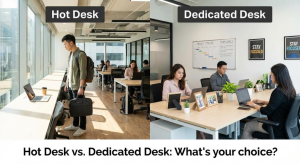
What is a Flexible Desk?
A flexible desk (or hot desk) is exactly what it sounds like—a workspace that isn’t assigned to anyone. It’s a “first come, first served” system. You can choose a different spot every day. In co-working spaces, flexible desks are usually in open areas designed to encourage interaction. You might sit next to a programmer on Monday, a designer on Tuesday, and a startup founder on Wednesday.
Key features of flexible desks:
No fixed seat; you can sit somewhere new each day
Usually no personal storage (lockers may be extra)
Lower cost, often billed monthly or by the day
Best for people who work remotely or are often out of the office.
What is a Fixed Desk?
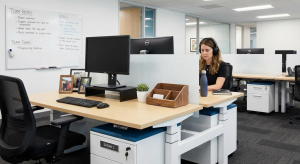
A fixed desk is a workspace that belongs just to you or your team. It’s like having “your own desk” in a traditional office. You can arrange it how you like, keep your things there, and sit in the same spot every day.
In co-working spaces, fixed desks are also usually in open areas, but they have clear markings showing they’re reserved. Many spaces even let you add small shelves, whiteboards, or other items to make the space feel more like your own.
As a company grows, managers may need more professional setups. That’s when executive office desk sets become a good option. These sets usually include a larger desk, a high-quality ergonomic chair, visitor chairs, and filing cabinets. They create a more professional and authoritative workspace that’s good for meeting clients.
Key features of fixed desks:
Reserved just for you, available 24/7
Personal storage (drawers, filing cabinets)
Higher cost than flexible desks
Best for people or teams who need a stable, long-term workspace
The Benefits of Flexible Desks
1. Better Value for Money
For startups and freelancers watching their budget, flexible desks are the most affordable option. In a prime co-working space in a major city, a flexible desk can cost 30% to 50% less per month than a fixed desk. If your team works remotely a lot or travels often, paying only for the days you actually use makes even more sense.
2. You Can Choose Your Spot Each Day
Flexible desks let you “pick the right seat for the job.” Have a video call? Find a quiet corner. Need to brainstorm? Move to a sunny window spot. Writing a report? Choose an area away from the coffee machine and busy walkways. Fixed desks can’t offer this kind of daily choice.
3. You Meet More People
One of the biggest hidden benefits of flexible desks is the chance to network naturally. Every day, you’re surrounded by different people from different industries. This can lead to new friends, new ideas, and even new clients.
We once worked with a freelance illustrator who met three startup founders at her flexible desk area over a few months. All three later hired her for projects. This kind of “accidental networking” is much harder to do when you’re sitting at the same fixed desk every day.
4. The Space Stays Cleaner
Because flexible desk users must clear their things at the end of each day, these areas tend to stay much tidier. No piles of papers, no old sticky notes, no dusty personal items. Every morning, the space feels fresh and ready to use.
5. Easy to Try Different Locations
Flexible desk memberships are usually short-term. This makes it easy to try out co-working spaces in different parts of the city. If you have clients on the west side today and a project on the east side tomorrow, a flexible desk supports this kind of multi-location lifestyle.
Part 4: The Benefits of Fixed Desks
1. A Sense of Belonging
For people who spend 8 to 10 hours a day at work, having your own space is good for your mindset. You can arrange your desk to suit your habits, keep reference materials nearby, and even put up a few motivational notes. This sense of ownership can help you settle in and focus better.
2. Convenient Storage
Fixed desks usually come with drawers or small cabinets. You can leave your laptop lock, reference books, personal items, or even a spare pair of shoes at work. For tech workers or creatives who carry a lot of gear, this makes the daily commute much easier.
3. Better for Teamwork
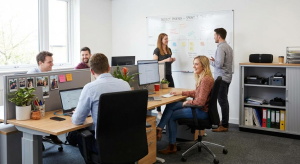
For small teams, fixed desks are the foundation of collaboration. When everyone sits in the same spot every day, it naturally creates a feeling of “we’re in this together.” Quick chats, fast updates, and sharing materials all become much simpler.
4. A More Professional Image
As your team grows, fixed desks can be upgraded to look more professional. For example, giving managers executive office desk sets not only helps them work better but also sends a message to clients: “This is a real company.” These sets usually include a larger wooden desk, a high-quality ergonomic chair, and matching filing cabinets—a big step up from the startup look.
5. Predictable Costs
Even though fixed desks cost more per month, they make budgeting easier. If you’re planning your company’s finances for the year, knowing exactly what your office costs will be is very helpful. Plus, signing a longer contract often means you can negotiate a better rate.
How to Decide – A Simple Framework
Based on watching how hundreds of co-working users actually work, here’s a simple way to decide:
Choose a Flexible Desk If:
Your work style: You spend more than half your time meeting clients, working remotely, or your office days vary a lot each week.
Team size: You work alone, or your team members are often in different places.
Social goals: You want to meet people from other industries and grow your network naturally.
Budget: You’re just starting out and need to keep monthly costs as low as possible.
What you carry: You can do your job with just a laptop and a few small items.
Choose a Fixed Desk If:
Your work style: You’re in the office 5 days a week, 8+ hours a day, and you need a stable setup.
Team size: You have a team of 3 or more people who need to work closely together.
Equipment needs: You use multiple monitors, testing equipment, or lots of reference materials.
Professional image: You meet clients at your office and need to look established and professional.
Future plans: You expect to stay in the same location for at least the next year.
When Should You Consider Executive Office Desk Sets?
Your team might be ready to upgrade to executive office desk sets when you notice:
You’re meeting clients more often and need a space that looks more professional.
Your core team has grown to 5+ stable members.
You’re starting to have different levels of management and need to show that.
Employees say their current desks don’t have enough space or storage.
Part 6: A Mix-and-Match Approach
Many experienced teams use a mixed strategy: fixed desks for core team members, plus flexible desk passes for everyone else.
For example, a 10-person startup might have fixed desks for its 5 core members, and buy 5 flexible desk passes for the sales team, freelancers, and interns. This gives the team stability without wasting money on empty desks.
An even more advanced setup: give managers executive office desk sets for more space and privacy, keep regular fixed desks for other team members, and let sales and visitors use the flexible passes.
This kind of mix works for different job needs while keeping costs under control.
Part 7: Practical Tips from Misimu
1. Try Before You Commit
If you’re unsure, start with a short flexible desk membership (1-3 months). Use this time to see how you like the co-working flow, and also to find out if there are any good fixed desk spots you might want later.
2. Watch How the Fixed Desks Are Used
Before signing up for a fixed desk, spend a week watching the area you’re interested in. Is it quiet enough? Is it near the facilities you need? Do the people around seem like good neighbors? A little observation can save you from a long contract you regret.
3. Think About Storage
Many freelancers don’t realize how much storage they’ll need until they’ve been working for a while. If your bag keeps getting heavier, or you’re always printing and keeping papers, a fixed desk with storage might be worth the extra cost.
4. Do the Math
Besides the monthly rent, think about:
Commute costs (if your fixed desk is further away)
Time costs (how long it takes to find a good spot each day with a flexible desk)
Opportunity costs (the new people you might meet with a flexible desk)
Equipment costs (if you need to buy extra storage)
5. Ask About Upgrades
If your team is growing, ask your co-working space about upgrading from a fixed desk to executive office desk sets. Some spaces offer flexible contracts that let you upgrade as you grow, without paying penalties.
Conclusion: Choose What Fits You, Not What’s Trending
There’s no “right” answer between flexible and fixed desks. There’s only what’s right for you.
For a freelancer just starting out, a flexible desk’s low cost and social opportunities could be exactly what you need to grow. For a small team that’s found its rhythm, the stability of fixed desks might be what keeps everyone working well together. And when your company reaches the point where image matters, investing in executive office desk sets shows clients you’re serious and helps your leaders do their best work.
Remember: as your team changes, your choice should too. Your decision today doesn’t have to be forever. Review your needs every 6 to 12 months, and adjust your setup as you grow. That’s the smart way to do it.
At Misimu, we believe the best workspace isn’t the most expensive or the trendiest. It’s the one that helps you do your best work. Whether you choose a flexible desk, a fixed desk, or executive office desk sets for your leadership team, we hope this guide helps you make a choice you’ll be happy with.